Quotation Software in Egypt 2026: Pricing Under Inflation and Online Approval

Quoting in Egypt today is a race against time: every day between the site visit and the customer's yes is a day material costs can move. So the question isn't "how do I write a quote?" but "how do I send it fast, with correct prices, and get a documented approval before prices shift?" This guide gives a practical answer for factories, workshops, finishing and supply companies.
Why do quotes go stale so fast in Egypt today?
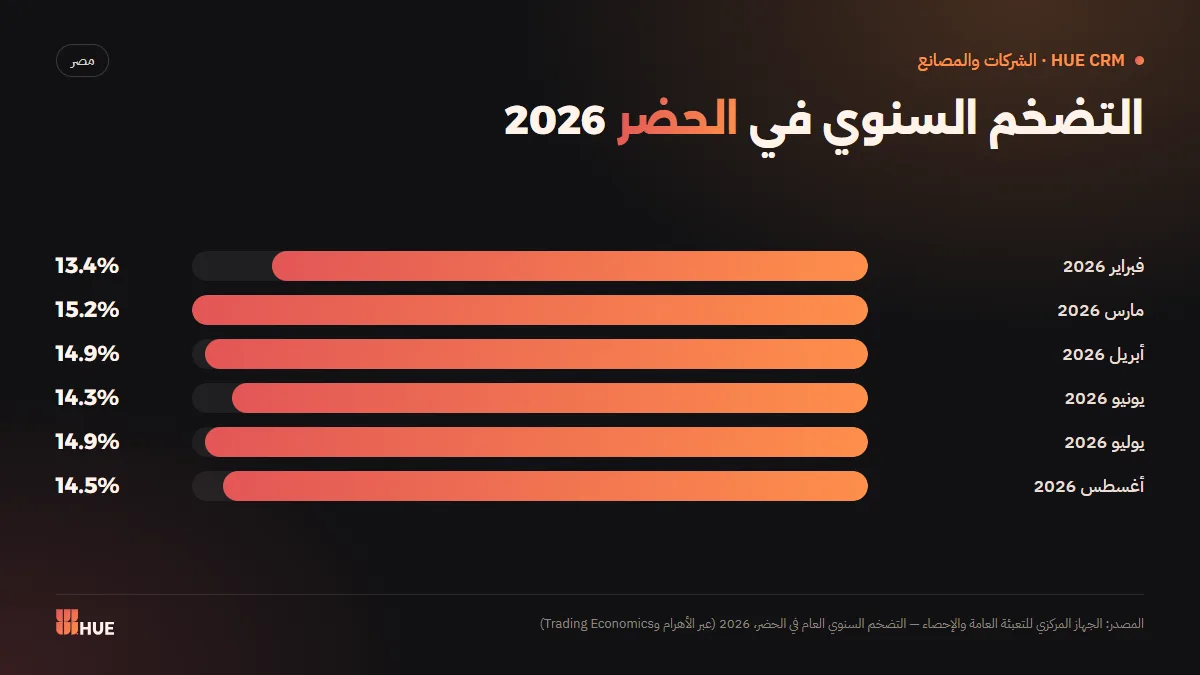
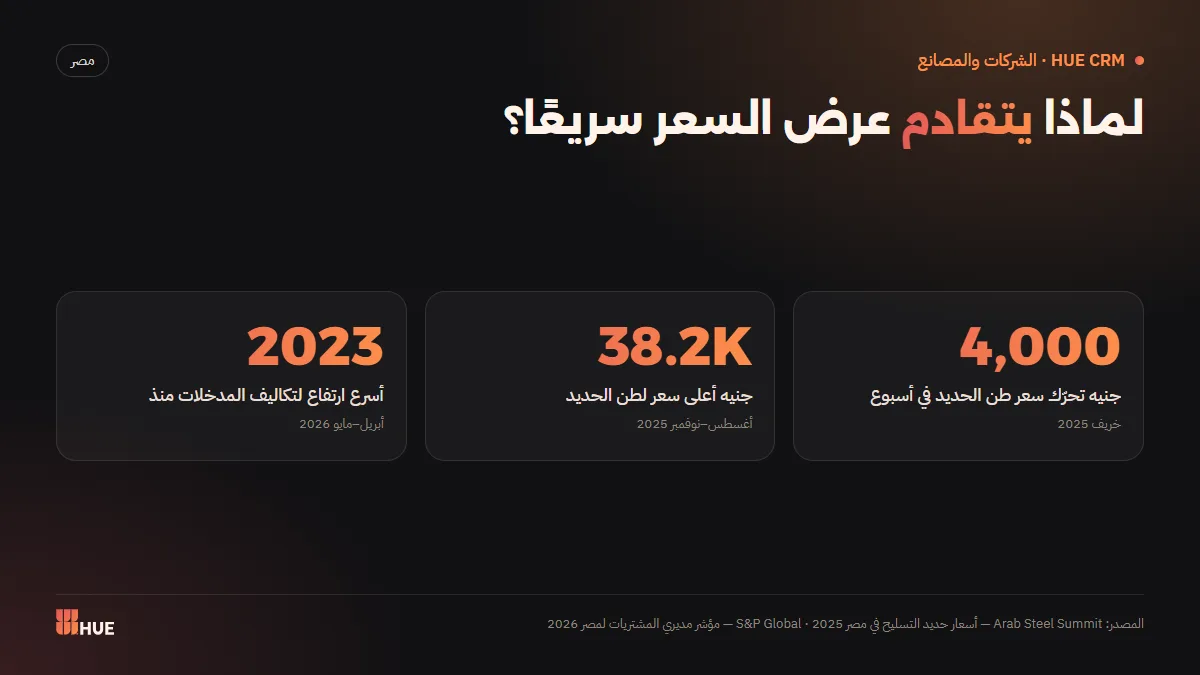
Because costs move faster than the usual sales cycle. Urban inflation ranged between 13.4% and 15.2% during 2026, firms' input costs rose at the fastest pace since 2023, and key materials such as rebar moved by thousands of pounds in a single week in 2025.
According to CAPMAS, annual urban headline inflation was 13.4% in February 2026, 15.2% in March, 14.9% in July and 14.5% in August 2026 — prices kept rising at close to 15% a year throughout.
For businesses, S&P Global's Egypt PMI showed input prices rising in April and May 2026 at the fastest pace since early 2023, driven by fuel, electricity, materials and wages. On materials, Arab Steel Summit recorded some mills' rebar prices moving by about EGP 3,800–4,000 per ton in one week in autumn 2025, within a range of EGP 31,500–38,200 per ton between August and November 2025.
What goes into a professional quote?
A professional quote answers every question before the customer asks: what they get, in which measurements and units, for how much, until when the price holds, how to pay, and when it will be delivered. The clearer the quote, the less haggling and the faster the approval.
| Component | What it should include | Why it matters under inflation |
|---|---|---|
| Company and customer details | Logo, name, contact | Looks official and is easy to refer back to |
| Items and measurements | Each item with its unit: linear metre, m² or piece | Prevents disputes at execution |
| Prices | Unit price and total | Shows the effect of any change in size |
| Validity | A clear date after which the price lapses | Protects you from material price moves |
| Payment terms | Down payment and instalments | Links execution to collection |
| Delivery or installation date | Estimated lead time from approval | Sets the customer's expectations |
| Approval method | A link the customer approves | Documents consent with its date |
How long should a quote stay valid?
There's no single right period. The rule: the more volatile your materials, the shorter the validity, and always a specific date rather than "for a limited time". At current inflation rates, many companies lean towards short validity periods and reissue when they lapse.
Illustrative example: an aluminium workshop relying on profiles and glass whose prices move quickly might set a short validity and state in its terms that prices are reviewed after it expires, while a maintenance company that mostly sells technicians' time might set a longer one. This shows a way of thinking, not a recommended number.
Because the terms are written once in the system and appear on every quote, you won't forget the validity or payment terms for any customer. Having a legal adviser review the wording is still worthwhile.
How do you update prices without losing the customer?
Update product prices in one place, build new quotes straight from them, and explain any change openly. Customers accept a revised price when the first quote had a clear validity date and the increase is tied to materials, not bargaining.
- Review key material prices regularly and update product prices in your product list.
- Build every new quote from the updated list, not an old file on one employee's laptop.
- Put validity and payment terms in your standard quote terms.
- Watch quotes nearing expiry and contact the customer before they lapse.
- When a quote expires, send a new one at current prices with a short explanation.
- Tie the start of production to approval and the down payment, so you never buy materials for an unapproved quote.
Why does online approval speed up the customer's yes?
It removes the steps between "I like it" and "go ahead". Instead of printing the quote, waiting for a reply to a PDF or booking a signing visit, the customer opens a link on their phone and approves in one tap; the approval lands in the system with its date and work starts right away.
That fits how Egyptian customers communicate: GoDaddy's MENA small business survey (2023) found 67% of small businesses in Egypt use WhatsApp for business. A link on WhatsApp is closer to the customer than email or paper.
| Step | Paper or PDF over chat | Quote with an approval link in HUE CRM |
|---|---|---|
| Sending | A file sent by hand, easily buried in chat | A PDF and a link in your company's name |
| Approval | An "OK" message, a call or a later signature | One tap on the phone |
| Record | Hard to prove which version was approved | Approval logged with its date on the quote itself |
| Moving to execution | Someone has to tell the factory | The order becomes a production order |
| Follow-up | Depends on the salesperson's memory | Every quote's status is visible to management |
How does quoting work in HUE CRM, step by step?
The quote starts at the site visit and ends with a production order, in one path with no copying between files. Measurements are logged in your activity's units, the quote is priced from your products, sent with your logo and terms, and approved by the customer from the link.
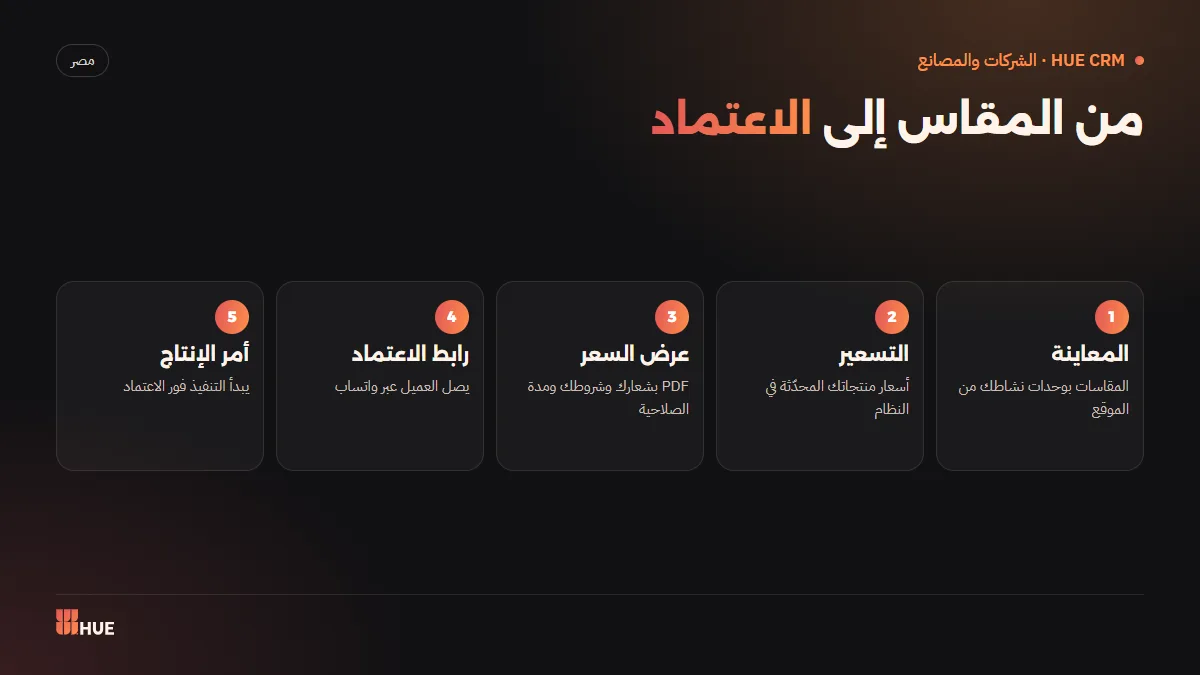
- Site visit: the technician records measurements in your activity's units, from linear metre to m² and piece.
- Pricing: pick items from your product list at current prices; products are unlimited.
- Issue: the quote comes out with your logo and terms, as a PDF and a link.
- Send: the link reaches the customer in ready WhatsApp messages that follow your activity.
- Approve: the customer approves on their phone and the order status updates.
- Execute: the order becomes a production order, then delivery or installation and collection, as in the CRM guide for factories and workshops.
How does pricing differ from one activity to another?
Pricing differs with the unit the work is measured in and with where cost volatility comes from. A workshop selling by the square metre is exposed to sheet and profile prices, a supply-and-install company to the price of the unit itself, and a service company mostly to wages. Knowing your volatility source tells you which lines need faster review.
| Activity | Common pricing unit | Biggest source of volatility | What to watch on the quote |
|---|---|---|---|
| Kitchens and furniture | Linear metre, piece | Boards and accessories | Price accessories separately from the carcass |
| Aluminium and glass | Square metre | Aluminium profiles and glass | State the profile type and glass thickness |
| Marble | Square metre | Stone type and wastage | Spell out finishing and edges |
| AC and solar | Piece, kW | The equipment price | Separate equipment from installation |
| Building materials and wholesale | Ton, carton | Daily mill prices | Short validity and a clear delivery date |
| Maintenance and landscaping | Visit, square metre | Wages and supplies | Say what the price includes and excludes |
These are guiding examples of a way of thinking; each activity's actual units appear automatically when you pick it in the system, out of 26 units. What matters is separating the most volatile lines from the rest, so you can update them without rebuilding the whole quote.
What are the common quoting mistakes under inflation?
The costliest mistakes look small: no validity date, items without units, or a quote copied from an old file with last month's prices. Any one of them can turn a profitable job into a loss.
- Writing "prices subject to change" instead of a specific validity date.
- Sending old prices because the file lives on one employee's laptop.
- Mixing units in one quote, pricing one item by linear metre and a similar one by piece without saying so.
- Accepting a verbal yes without a record, then disputing which version was agreed.
- Buying materials before approval and the down payment.
- Leaving sent quotes without follow-up until they expire.
Is the quote linked to the e-invoice?
A quote isn't a tax invoice, but it is the basis of its data. When the quote uses correct units tied to the ETA unit codes, data flows into your accounting software accurately. HUE CRM doesn't issue e-invoices; it works alongside your software, as we explain in E-invoicing and your sales system.
Conclusion
In 2026 a quote is no longer a sheet you send and forget; it is how you protect your margin. Current prices, clear units, a fixed validity date and an approval link on WhatsApp shrink the window in which costs move against you. When approval feeds straight into production and collection, the whole sales cycle gets shorter and clearer. See the plans on the pricing section.
Sources
- Ahram Online — Egypt's annual inflation in August (CAPMAS), 2026
- Trading Economics — Egypt inflation rate and urban series, 2026
- Ahram Online — Egypt PMI (S&P Global), 2026
- Trading Economics — Egypt PMI, August 2026
- Arab Steel Summit — Rebar prices in Egypt, 2025
- Campaign Middle East — GoDaddy MENA small business survey, 2023
- Egyptian Tax Authority — E-invoicing unit type codes
Questions
How long should a quote stay valid in Egypt today?
There's no single period; make it shorter the more volatile your materials are, and write a specific date in your quote terms rather than a vague phrase.
Is a quote legally binding?
That depends on its wording, terms and what both sides agree, so write clear validity and payment terms and have a legal adviser review them.
How do I revise a quote without losing the customer?
Update product prices in the system and send a new quote once the first expires, explaining that the change follows material costs.
Does approving through the link count as accepting the quote?
Approval through the link is logged with its date on the quote itself, giving a clear record that the customer approved that version and its terms.
Can I send a quote on WhatsApp?
Yes. Each quote comes out as a PDF and a customer link you can send within the ready WhatsApp messages that follow your activity.
Does the system issue an invoice after approval?
No. HUE CRM doesn't issue e-invoices; it turns the approved quote into a production order and tracks delivery and collection, while the invoice comes from your accounting software.